Compounding Crises and India’s Invisible Burden: A Summary
Multiple crises are burdening India's informal sector
Sonali Bhasin, Purpose
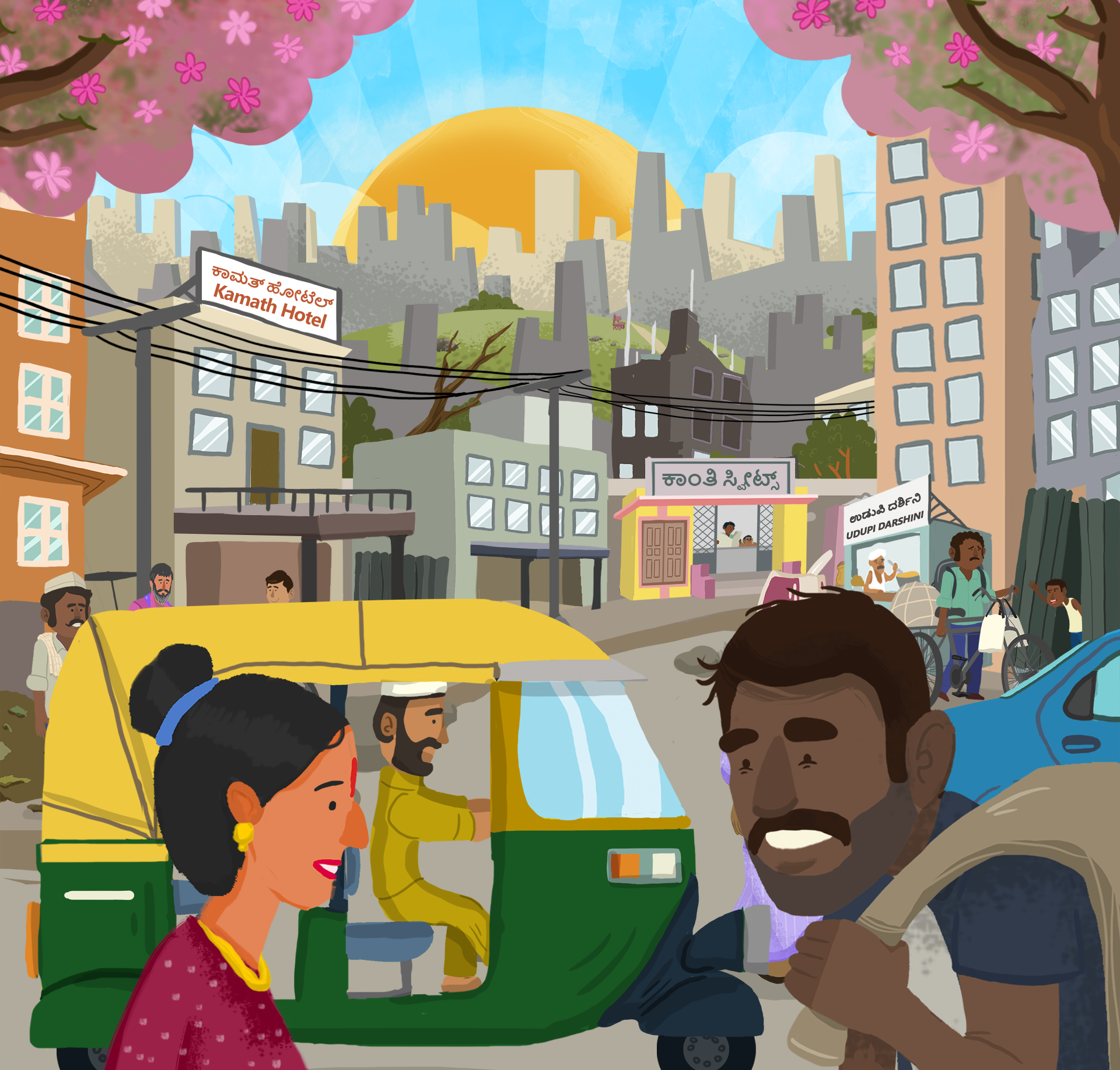
There are multiple crises hitting India’s informal economy this summer: extreme heat exacerbated by this summer’s Super El Nino; the West Asia disruption which is responsible for fuel and fertiliser shortages as well as income loss from agricultural exports, and the mass return of migrant workers, and increased strain on India’s grid from cooking and cooling energy demands.
We are seeing a gap in the solutions and actors that work at the intersections of these crises. Different information ecosystems treat them as separate stories, with different parts highlighted in traditional, digital and social media. Addressing them will require cooperation, and the bringing together of fragmented audiences and sectors that still exist – an aspiration that we are taking to London Climate Action Week next week.
Last month, Purpose hosted Aishwarya Mohanty of Migration Story, Siji Chako of Jan Sahas, Deepak Tewari, WRI India, and Ramanjaneyulu GV, of the Center for Sustainable Agriculture to give expert talks on the intersections that their work focuses on, in our virtual discussion ‘Compounding Crises and India’s Invisible Burden’. Here is what they unpacked.
Extreme heat and the food crisis are exposing new cracks in an already fragile informal labour system.
Coverage of Indian informal workers migrating focus primarily on those workers returning from the West Asian war. However, this misses the many other aspects of migration this summer: of the mental and financial distress for the workers who are no longer able to migrate; the high food costs from LPG shortages or reduced workday hours due to heat that led workers to leave; the increased burden on women to feed and support their families; and the reduced number of jobs that await them back home. For workers who remain, constant work demand combined with high heat increases workload and stress. The resulting environment is ripe for exploitation in informal labour markets, characterized by reduced bargaining power and dropping wages. This instability means only about 6.5% of workers are able to save or send money back home.
Solutions for extreme heat need to be better integrated into existing support systems. Extreme heat directly threatens worker health and wages, with 72% of surveyed workers reporting wage loss due to extreme weather. The felt experience of extreme heat varies by worker type and location. Felt temperatures for gig workers can reach 55°C on the road, while conditions in humid fields can be 5–6 degrees higher than ambient air. Essential protections are missing: construction workers lack basic access to drinking water and sanitation. In informal settlements and aanganwadi centres, buildings made of heat-trapping materials result in indoor temperatures being 5–6°C higher than ambient
Simultaneously, India’s electricity infrastructure is not prepared for the demand in cooling energy that is projected: 180 GW by 2035, or roughly the energy required by a country like Germany.
The LPG crisis impacts not just the cost of food, but the quality of diet. In households, high rates for LPG cylinders have led to lower frequency, and poorer diets, as families switch to low-cost, quick-cook foods like instant noodles. Outside the home, tiffin prices have increased, and availability of low-cost food has decreased. Clean energy transition discussions around electric stoves and biogas are deeply disconnected from reality; as many workers seeking affordable and accessible cooked food do not have access to electricity or biogas. Since women typically eat last, their nutritional intake is affected, which has implications for their health
We are underestimating the impact that this summer will have on the agricultural sector. Severe risks from delayed and erratic rainfall due to El Niño, could threaten up to 50% of India’s key crops like rice and maize. Beyond crops, livestock will be significantly affected. With water shortages and rising temperatures, animals receive less attention and resources, and if crops fail, fodder availability also reduces. As a sector, we need to pivot to recognise and prevent “lock-ins” that reinforce vulnerability: incentivising water-intensive crops, with limited support for sustainable alternatives like composting, soil health, or water conservation.
Crises deepen gender inequality by disproportionately shifting financial and care burdens onto women. The reduction of jobs directly impacts women’s income access, while the return of male family members shifts financial responsibility to them, resulting in increased conflict and domestic violence. A key structural gap is the lack of standardized metrics to value and measure unpaid care work, making it impossible to quantify the economic losses of heat on this essential labour.
Solutions highlighted:
Here are some of our key takeaways from the virtual discussion:
- Narratives and representation of the intersecting impacts of these crises are missing. This is impacting the way solutions are shaped. Different information ecosystems treat them as 6 separate stories, instead of facets of the same story. This shapes the way practitioners, policymakers, and solutions adopters react to these crises
- The face of extreme heat and informal work is multifaceted: in our reporting about extreme heat, food, and energy, we are missing the faces of women, senior citizens, and children. We also need new narratives to ensure that hidden costs: gender, unpaid care work, and indoor heat burdens reshape our understanding
- We must redefine vulnerability in the face of these cascading crises, to create effective interventions. We need better measurement of indicators like felt heat in different workspaces, access to nutritional diets, intra-household food distribution, risk of domestic violence, and or exclusion from public schemes based on migration status
- As a sector, we must recognise and shift our approach to address harmful lock-ins: solutions don’t take into account current climactic realities and thus reinforce rather than address vulnerability: for e.g. providing more work opportunities during heat-intensive months but without infrastructural support; incentivising water-intensive crops, or heat-sensitive livestock over sustainable alternatives like composting, soil health, or water conservation, or investing in urban planting for cooling, but at the cost of informal settlements.
- Leverage existing programs: Integrating heat-sensitivity into existing schemes (like housing or financial services) through tweaks to the solutions and guidelines, which is faster than building entirely new frameworks.
- Break the silos between energy, cooling, and food: for government departments, practitioners and the private sector to unlock investments, safety nets, and uncover hidden costs before it is too late
- Decentralising extreme heat, energy and food work will create more responsive solutions. More micro-level data gathering, for accurate interventions, using GIS, accounting for humid, indoor, outdoor heat variations, for specific crop conditions, and building cooling demands