Women Lead Justice
From Declaration to Action for African Women and Girls
Nalafem and Difference She Makes Team
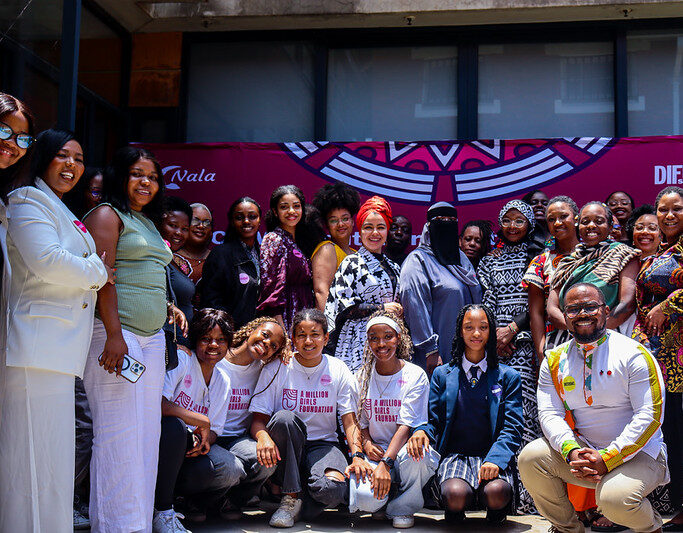
2025 was a pivotal year in global politics, with Africa emerging as a leader in shaping political, legal, and economic policy. Over the year, a massive Pan-African undertaking has been unfolding as over 500 feminists across four generations, representing 35 countries and the Diaspora, convened to redefine the future of justice.
This collective effort, led by the Nala Feminist Collective (Nalafem) in partnership with The Difference She Makes and local partners, was built on the earned wisdom of national and Pan-African dialogues in Kenya, Nigeria, Cameroon, Sudan, and South Africa. This rigorous process resulted in the CSW70 Africa Intergenerational Feminist Declaration, a unified roadmap for a justice system that is truly accessible, survivor-centred, and transformative.
The Declaration acknowledges that for too many, justice remains a “lived impossibility” due to discriminatory laws, high costs, and institutions that are procedurally hostile and urban-centric.
At the same time, the quest for justice faces modern and intersecting crises, from conflict-related sexual violence and displacement to the rapid expansion of technology-facilitated gender-based violence. Digital harms like doxxing and AI-generated abuse are increasingly weaponised to intimidate women leaders and shrink civic space, making the demand for a new architecture of justice more urgent than ever.
The insights within this declaration are the earned wisdom of women navigating systems that were never designed for them. Through their voices, experiences and thoughts, we see that justice is the invisible thread connecting a woman’s ability to own her land, protect her body, lead her community and live fully every day.
Read the full declaration here:
What We Heard: The Earned Insights
The dialogues showed that justice often fails when those responsible for administering or enforcing it do not share the lived experiences of those they serve. More importantly, they demonstrated that the presence and leadership of women in these spaces, particularly within the legal system, help ensure that justice and the law are maintained and upheld. Simply having women enter the legal field is not enough; we need women leading at every level to transform these eight pillars of action into tangible realities.
- Access to Justice and Policy Reform: Justice is currently a “lived impossibility” because systems are urban-centric and procedurally hostile. By putting women at the helm of policy reform, we can decentralise the system through mobile justice units and ensure that statutory protections finally override patriarchal norms.
- Criminalising Gender-Based Violence & Femicide: In many African religious states, violence is frequently dismissed as a “family matter”. When women lead law enforcement and the judiciary, SGBV is approached as an emergency, shifting cases from private family settings to survivor-focused courts that emphasise accountability rather than reconciliation.
- Technology Facilitated Gender Based Violence & Digital Justice: Digital spaces are being weaponised to shrink women’s civic space. We must ensure the presence of women in technology policy creation. Their expertise is vital for ensuring “safety-by-design” obligations for both platforms and users, enacting and adequately resourcing comprehensive digital safety frameworks and the successful prosecution of this form of abuse.
- Women In Leadership In Law: We are moving past tokenism toward actual authority. True justice reform requires women in senior judicial roles to enforce care policies, advance pay equity, and uphold gender-responsive institutional norms that transform the framework of leadership.
- Women, Peace and Security: Women are first responders in crisis, yet they are systematically excluded from peace negotiations. By mandating 50% women’s participation in transitional governance, we ensure that justice in conflict zones includes secure reporting pathways and legal identity for the displaced.
- Financing Justice and Survivor-Led Accountability: Without budgetary control, access to justice remains rhetorical. Women in leadership ensure that budgets are gender-responsive and that independent “justice scorecards” are used to hold institutions publicly accountable for their performance.
- Land, Education, Economic & Reparative Justice: By increasing women’s leadership in land administration, we ensure the enforcement of inheritance rights and the establishment of Reparations Funds to address the structural harm of dispossession.
- Intergenerational Solidarity: Our strength lies in our collective action. By institutionalising mentorship and dismantling the gatekeeping of resources, we ensure that the next generation of feminist leaders is equipped to defend and expand these hard-won rights.
This declaration is a blueprint for transformative justice. It isn’t a “nice-to-have”; it is a demand for:
- Constitutional Literacy: Ensuring every girl understands, claims, and defends her rights from a young age.
- Safe Spaces: Creating reporting channels and humanitarian responses where a woman’s rights are non-negotiable.
- Accountability: Establishing “Reparations Funds” and “Citizen Audits” so that governments don’t just make promises—they keep them.
The Road to CSW70 and Beyond
Our vision at Difference She Makes has always been about the ripple effect, and through this declaration, we continue to move past “symbolic inclusion” toward systemic transformation.
The culmination of these efforts is set for March 2026 at the 70th Commission on the Status of Women (CSW70).
During this time, and in collaboration with Nalafem, we will be hosting the ‘Women Lead Justice: From Declaration to Action for African Women and Girls’ event to mobilise the Declaration into action, convene feminist leaders, legal experts, and policymakers to drive coordinated influence across justice reform and digital safety.
By bridging these generations and borders, we are ensuring that the African intergenerational agenda doesn’t just enter the room—it changes the very foundation of how global justice is delivered.
We invite you to explore the full declaration and join us in holding our institutions accountable to these earned demands.
Join the Conversation: What does justice look like in your daily life? How can we move from “inclusion” to “transformation” in our own communities? Let’s talk in the comments.