Inside Sabki Suno Saa’s Thandi Baithak
Reframing extreme heat as a crisis of gender and power
Ananya Sharma and Tarang Mohnot
“When my mother asked for an AC or cooler, nobody would install it.”
“I tell my father, nobody is giving you an award for living a difficult life.”
“The pressure of being ‘the cook’ of the house makes my mind feel like it will burst.”
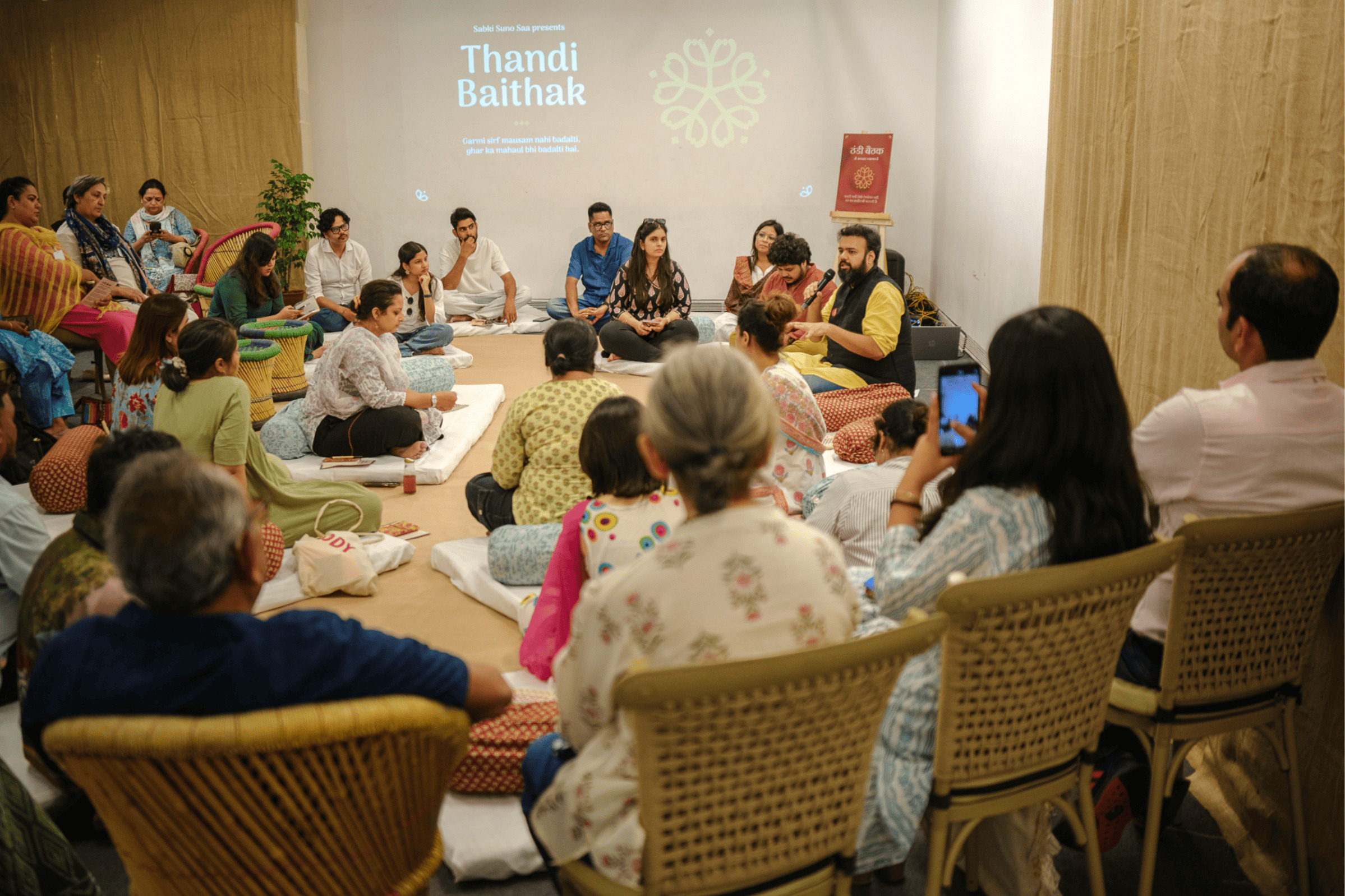
These experiences, in isolation, seem unrelated. But together, they reveal how extreme heat can expose the often-unseen dynamics of care, responsibility and power within homes. These were some of many stories that emerged during conversations at Sabki Suno Saa‘s first Thandi Baithak in Jaipur, where participants explored a simple question: What does extreme heat reveal about relationships, power, and care within our homes?
The Heat We Don’t Talk About
When we talk about extreme heat, the dialogue usually stops at weather forecasts, public health, or climate metrics. But temperature doesn’t exist in a vacuum. Long before a heatwave makes headlines, its true impact is felt behind closed doors.
A recent study across South Asia found that a 1°C rise in temperature is associated with a 4.49% increase in intimate partner violence (IPV), with India projected to be one of the hardest-hit countries as temperatures continue to rise. Yet another report from India found that 41% of women experienced increased irritability during peak heat, 33% reported heightened anxiety or stress, and over half of women who had experienced household violence said it occurred more frequently during the summer months.
These statistics quantify that extreme heat does not just raise temperatures, it increases domestic pressures and strains home dynamics. Now, consider these facts in the context of Rajasthan—an already hot and arid region, where extreme heat is often treated as an ordinary part of life; something to simply endure. As temperatures in the state increasingly exceed 50 °C during severe heatwaves, the burden of heat extends far beyond physical discomfort.
About Thandi Baithak
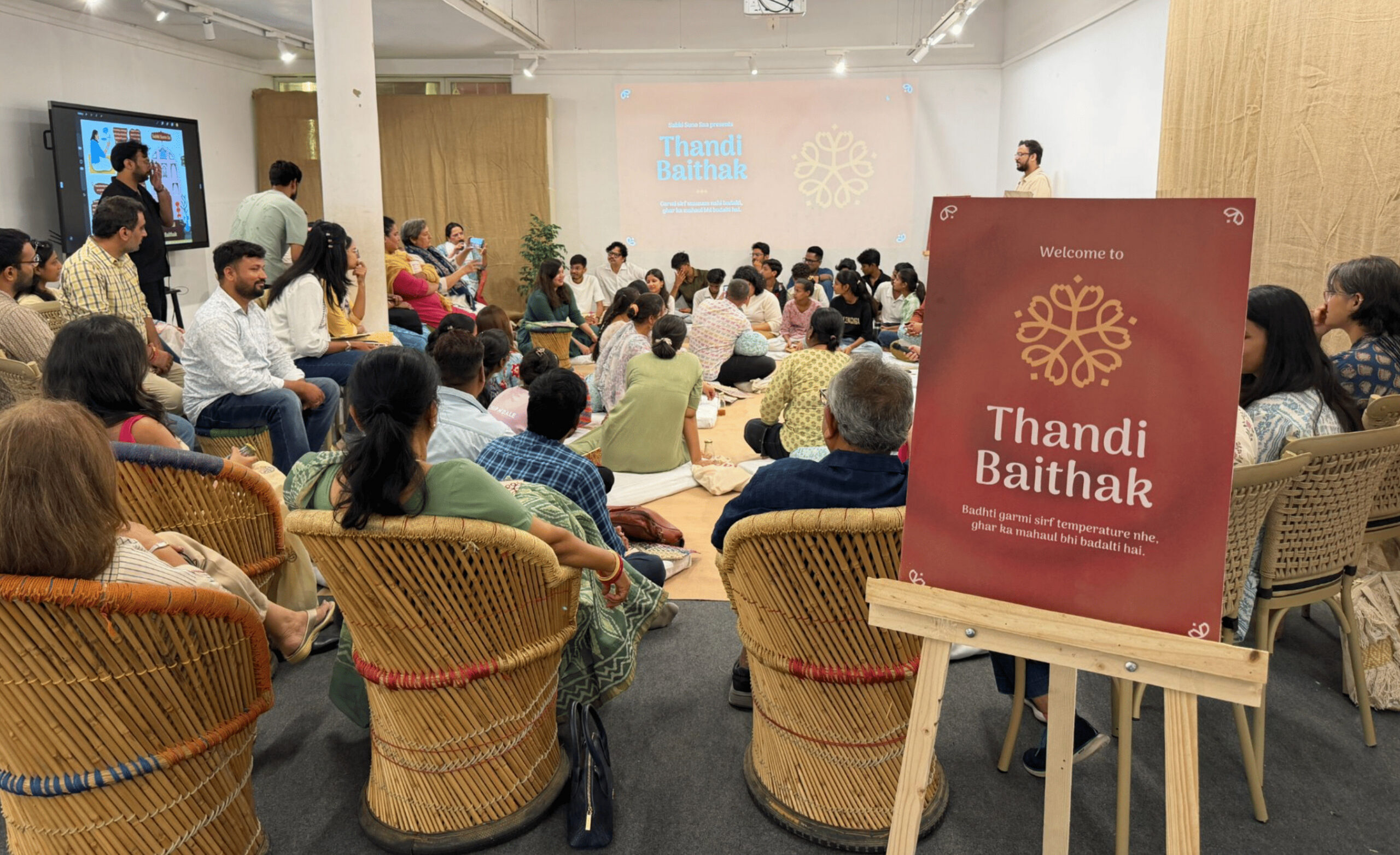
It was against this backdrop that Thandi Baithak was conceived. Held on 2nd June 2026, it was part of Sabki Suno Saa—Purpose’s multi-year campaign to prevent gender-based violence by fostering healthier, more equitable relationships across Rajasthan. Choosing extreme heat was a deliberate strategic choice. For Rajasthan, heat was not simply the topic of discussion; it acted as a tangible, universally felt entry point to explore deeper issues of care, power, relationships, mobility and family dynamics that are often difficult to talk about. Bringing together a convergence of artists, researchers, grassroots practitioners, journalists, climate experts, community organisations, youth leaders, and storytellers, Thandi Baithak transformed a shared physical reality into a deeper conversation about equity inside the home.
Thandi Baithak was a two-part experiential event, carefully designed to make attendees active participants rather than passive observers.
Part I: Storytelling Through Everyday Objects
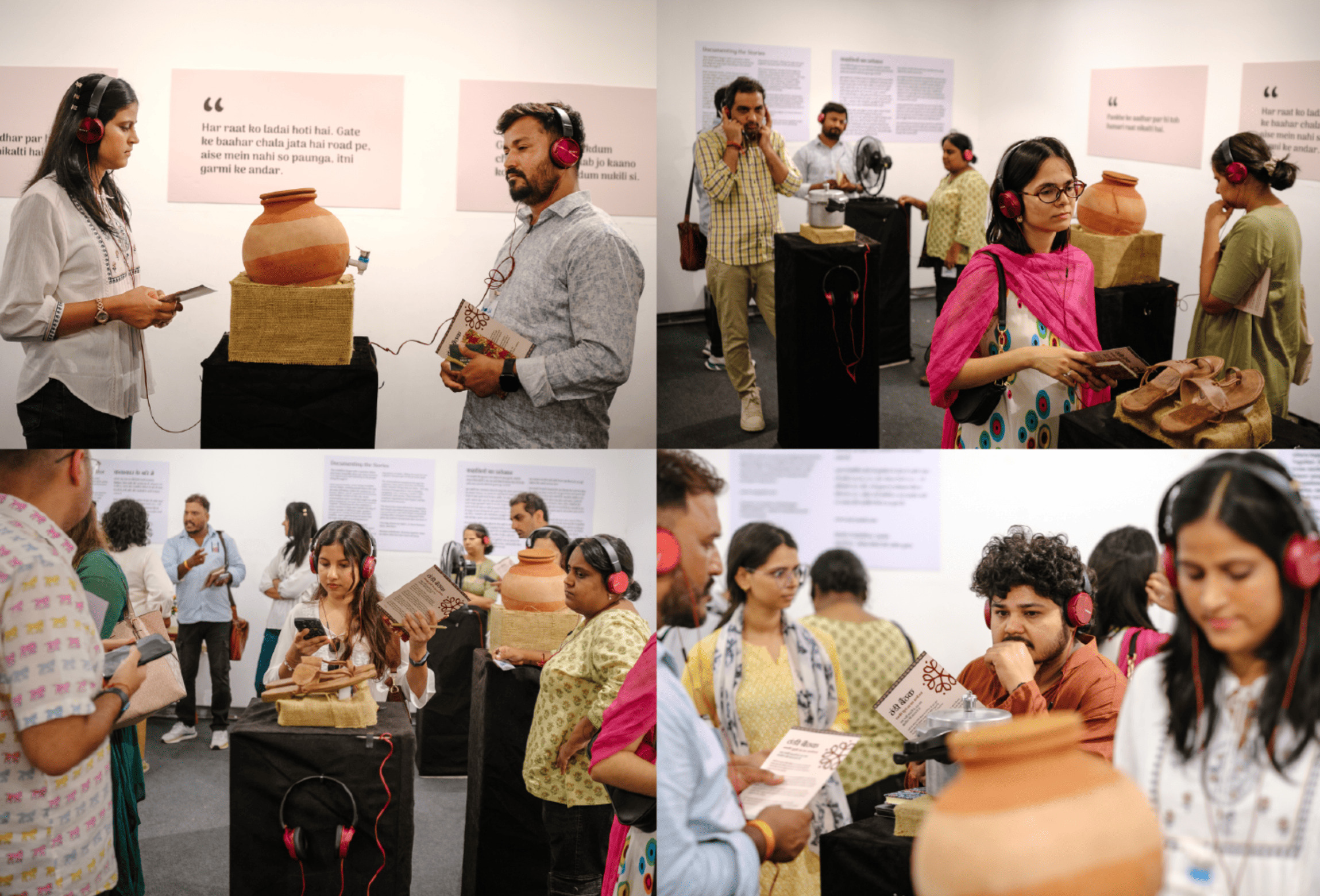
In collaboration with sound artist and documentarian Navya Sah, we curated an immersive, tactile audio exhibition rooted in conversations with over 20 people across Jaipur.
Over several weeks, Navya met people across the city, where life was already unfolding: inside her parked car, in homes, offices, parks, and neighbourhood streets. While some conversations were carefully sought out, others happened through chance encounters.
Together, they brought into this exhibition a cross-section of those who inhabit Jaipur: people of different ages, genders, occupations, family structures, and lived realities, each experiencing the same heat through very different circumstances.
The exhibition housed the stories inside five familiar household objects to ground these personal accounts in tangible reality, using ordinary items as windows to show how comfort, power, and labor are negotiated within the home:
- The Pillow: Who absorbs the tension when patience runs low?
- The Pressure Cooker: What does it mean to keep going when domestic pressure reaches its limit?
- The Matka (Water Pot): Who fetches the water, keeps it cool, and ensures others have access to relief?
- The Fan: What does comfort mean, and who gets access to it when resources are scarce?
- The Chappals: Who gets to leave the house during a heatwave, and who stays?
Part II: The Baithak
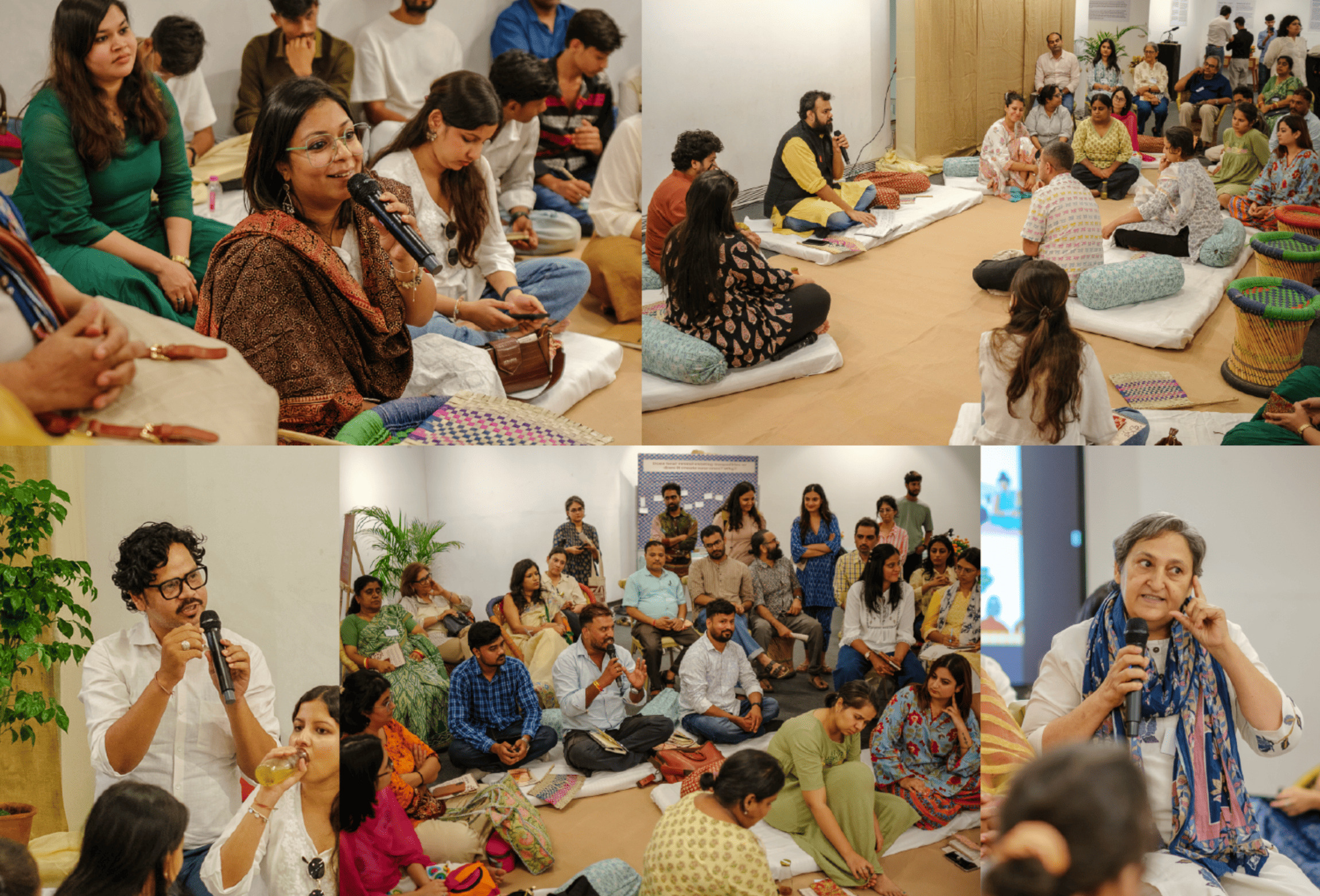
The conversation continued at the Baithak, where participants explored what everyday experiences of heat reveal about relationships, equity, and well-being. Rather than a traditional panel, everybody sat together in a non-hierarchical circle, guided by a simple principle: listen first.
While heat brought everyone into the room, the conversations soon turned to the relationships, expectations, and everyday negotiations that determine how heat is experienced. One participant reflected on visiting a women’s prison, where women were expected to take on kitchen duties—a reminder of how deeply gendered care work is embedded in our institutions. Another shared how their mother was guilt-tripped by relatives for hiring a cook, revealing how seeking support is often seen as a failure to fulfil one’s role.
Others spoke of invisible caregiving, negotiating limited resources, how well-meaning concern can sometimes become restriction, and how comfort within the home is often shaped as much by power as by need.
The Conversations That Stayed With Us
A theme that resurfaced over and over again through the evening was that heat doesn’t create inequality; it often makes existing inequalities harder to ignore.
Across stories and perspectives, a few other reflections stood out:
Comfort is negotiated through power. Whether it was access to a cooler, the freedom to rest, or the expectation to keep working through the heat, participants reflected on how relief within the home is rarely distributed equally.
Empathy only counts when it becomes action. Noticing someone else’s burden isn’t enough. Care becomes meaningful when it translates into shared responsibility—stepping into the kitchen, starting the conversation, or simply asking how you can help.
Change spreads through example, not instruction. Small, everyday acts of sharing care and questioning norms often ripple through families and communities more effectively than advice alone.
Small conversations matter. Sometimes, the most powerful intervention is also the simplest: “You’re feeling the heat. How can I help?”
Ultimately, Thandi Baithak reminded us all that preventing gender-based violence isn’t only about responding to moments of harm. It’s about creating opportunities to reflect on the everyday dynamics that shape relationships long before violence occurs.
Looking Ahead
The conversations sparked at Thandi Baithak reaffirmed the value of creating spaces where people can pause, listen, and reflect together. As Sabki Suno Saa continues, we look forward to taking these conversations to more communities across Rajasthan, using storytelling, dialogue, and culture to keep making the invisible visible.